
Oliver Johnson: A Legacy Beyond the Canvas
In 1977,
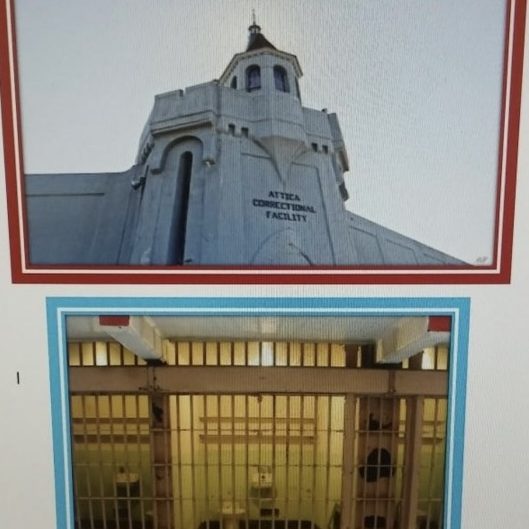
within the solemn walls of Attica C.F,
Oliver and I met.
Our cells stood side by side,
separated by iron and concrete,
yet somehow close enough
for two lives to touch
and for a friendship to begin.
From that small distance,
I came to witness something
extraordinary—
a man I knew in my heart
was a Master Artist.
Oliver was our inmate art instructor,
but he was more than a teacher.
He was an example.
He was a light.
He was a man who did not hold
his knowledge close to himself,
but shared what he knew
with those around him.
And when I watched him work
on his own exquisite masterpieces,
I realized that his paintings
were themselves lessons—
each stroke, each color,
each image becoming
an extension of his teaching.
Then Oliver was released.
And the vision I had witnessed
behind the prison walls of Attica,
found its rightful place in the world.
His paintings traveled beyond Attica,
beyond the walls that once confined him,
and into galleries throughout America and Europe.
His work found its way
into the hands of prominent collectors—
Daniel Arap Moi, President of Kenya;
Oprah Winfrey;
Susan Taylor;
former New York Governor Nelson Rockefeller;
Malcolm Forbes;
Ken Chenault;
Frank Sinatra;
Miles Davis;
Benny Goodman;
the Duke Ellington family;
Bill Cosby—and many others.
And yes,
I am honored to be on that list as well.
Even on The Bill Cosby Show,
Oliver's paintings could be seen
standing quietly in the background,
speaking without words.
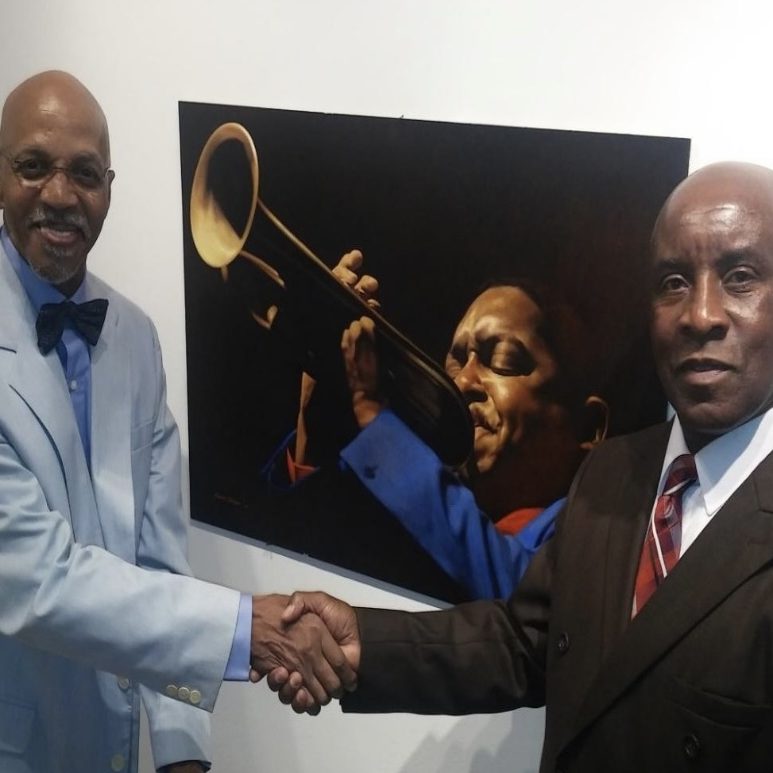
I remember standing beside Oliver
at an exhibition at Peg Alston Gallery,
watching people gather around his work
with wonder in their eyes.
My eyes were transfixed as well.
There was something in his use of colors—
a contrast so powerful
that the images seemed to move, shake
and breathe, as if coming off the canvas
itself.
Oliver had found a language
that did not require words.
His paintings spoke.
And they still speak.
Among the honors of his remarkable life,
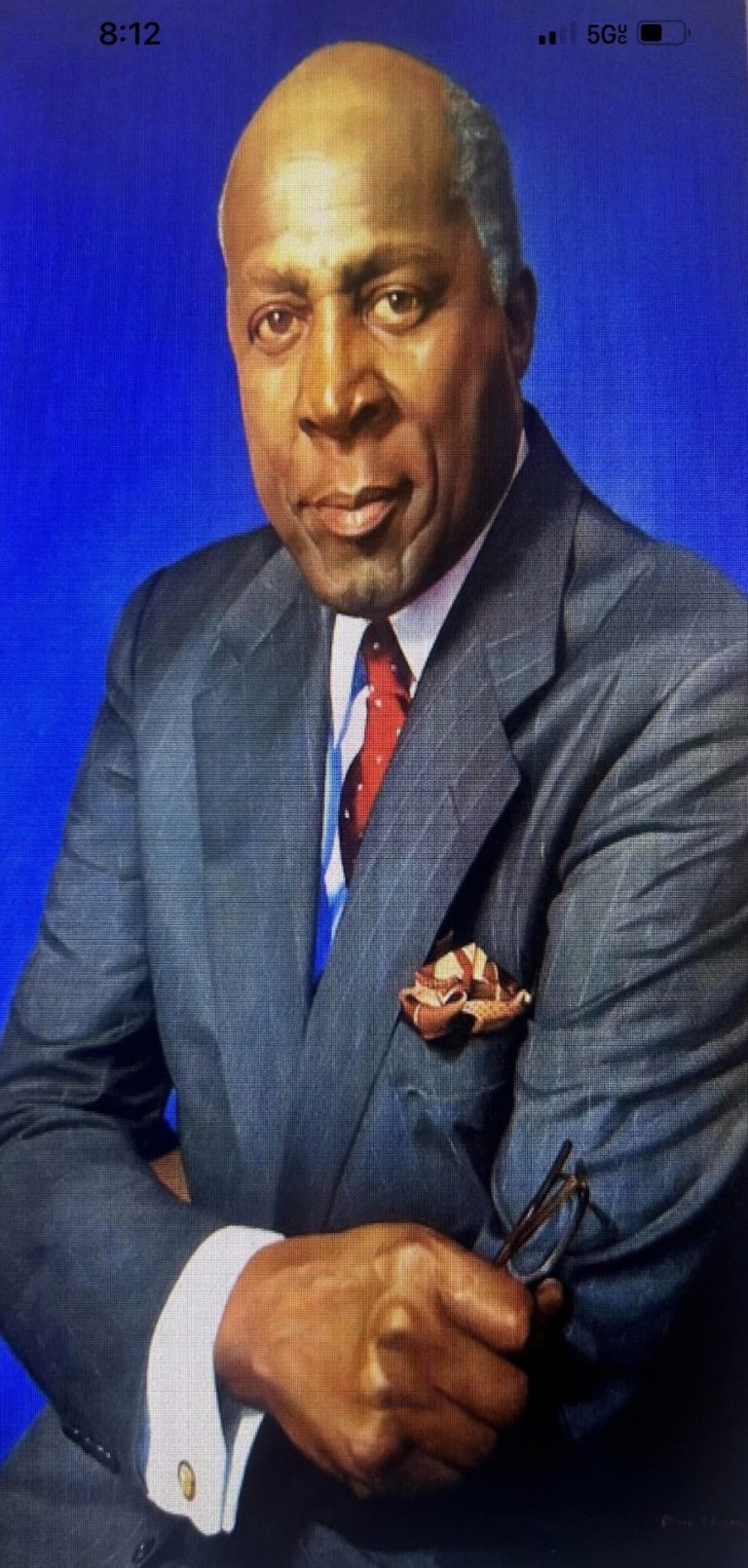
his portrait of Vernon Jordan
was placed in the Smithsonian's
National Museum of African American History and Culture
in Washington, D.C.
Also, his capturing painting of a Black Cat at the Whitney Museum in New York City, and his painting of a 'Trumpet' at the Studio Museum in Harlem, and a painting titled, 'Lead belly' at the Schomburg Library, clearly support his artist mastery.
These are not small accomplishments. These are great milestones
Yet even with these institutional acknowledgments,
I believe Brother Oliver remains
significantly underrated
in both the private and public art world.
And that is why I believe
the time has come
for the world to look again.
Really. really look again.
To look beyond the prison walls.
Beyond the exhibitions.
Beyond the names of those who collected his work.
But to look deeply
at the man,
the artist,
the teacher,
and the vision he carried
from the mid-1970s
until his transition in 2021.
I share our story
because I want fellow collectors—
those who have welcomed Oliver's work
into their homes, collections, and lives—
to join me in celebrating him,
re-evaluating his contribution to the art world,
and helping to preserve his place
among African American Art history.
I sincerely believe Oliver stood at the beginning of a movement that would later see artists such as
Jean-Michel Basquiat,
Kerry James Marshall,
and Jeff Koons to name a few,
rise to international recognition.
His story deserves to be remembered.
His work deserves to be seen.
And his legacy deserves
to be carried forward.
I, as a student of Oliver, am honored to do this.
Because some people leave behind
more than memories.
They leave behind a light.
A vision.
A testimony.
A legacy that continues to speak
long after the artist is gone.
Oliver Johnson is one of those men. And I believe I will follow his footsteps.
This page is dedicated
to honoring his life,
preserving his story,
and keeping his legacy alive.
And as I travel about,
sharing our story through my memoir,
"Can Any Good Come from Prison?"
Relating Our Story at Attica Prison and after our release, I hope our journey becomes a beacon of hope for those still behind bars—including those who never been behind bars. For surely, a person don't have to be in prison to be lock up.
That dreams can survive a 8 by 6 cell.
That hope can survive various degrees of darkness.
That imagination can pierce through doubt, where resilience and creativity have the uncanny ability to excel.
And that sometimes,
a friendship formed behind prison walls
can become a story that reaches far beyond them.
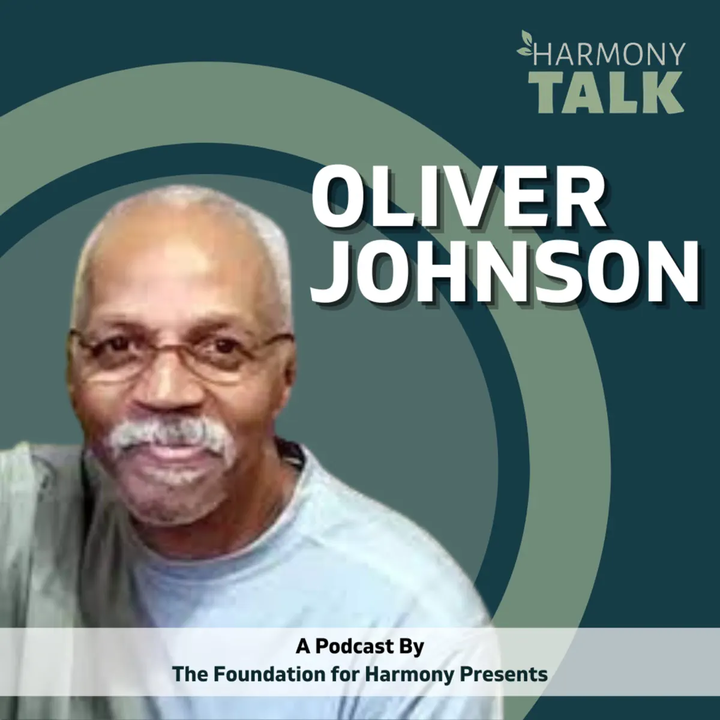
We invite you to explore the links beneath Oliver's photograph,
to learn more about his life,
his art,
his journey,
and the man behind the canvas.
Yes, we celebrate
the extraordinary life of Oliver Johnson—
a man whose impact
reaches far beyond the canvas,
and whose legacy
still has more to say.
View the links underneath Oliver's Photo, and listen to his words and view some of his masterpieces.
Vernon Jordan